The Ecosystem.
Three distinct roles. One transparent loop.
Each participant plays a specific checks-and-balances function.
The Frustrated Optimist.
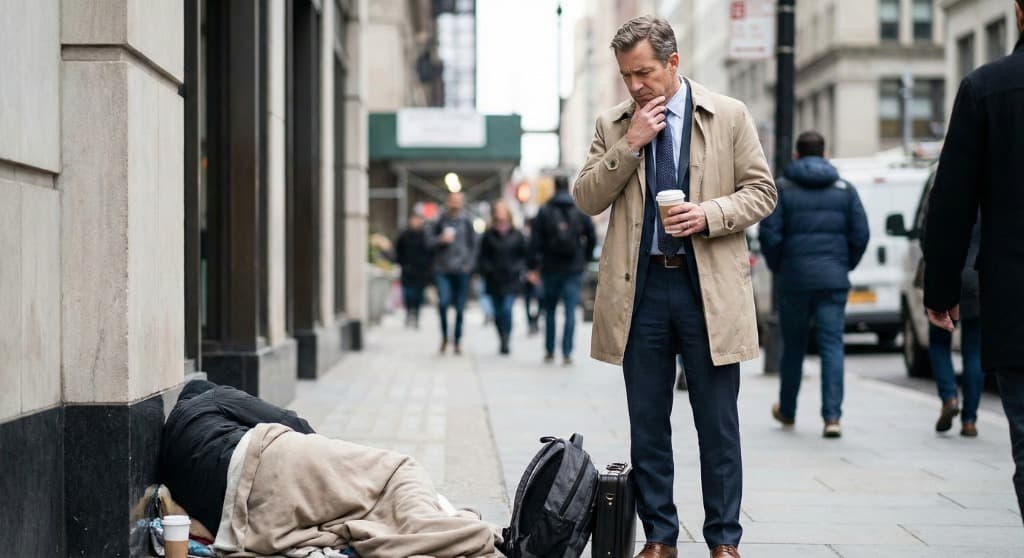
They are the banker walking past the person in blankets on the sidewalk. They are the engineer who sees structural failure in society.
They see the crisis and feel a deep, paralyzing conflict:"If I give cash, I'm just fueling addiction. If I pay taxes, 60% is eaten by bureaucracy."
They are tired of "patting themselves on the back" for funding failing non-profits. They don't want a tax deduction; they want to solve the problem. They want high-leverage, efficient, visible impact.

The Invisible Neighbor.
The individual in crisis. Often unbanked, ignored, or "managed" by systems that strip their agency.
They are often generalized as "addicts" or "helpless," but the data shows many are simply liquidity constrained. They possess a smartphone (a lifeline to the world) but lack the capital to use it effectively.
They don't want a shelter with a curfew. They want the dignity of buying their own food, paying for their own haircut, and securing their own future. They are ready to prove their path forward if given a chance.
The Trusted Bridge.
The Sponsor is the "Governance Layer." They are a friend, concerned acquaintance, or community leader who bridges the gap between the digital cloud and the physical street.
Their Duties:
- Verify Recipient Identity (KYC).
- Hold Legal Custody of the funds.
- Provide local guidance and support.
Strict Separation Rule
A Sponsor CANNOT be a Recipient. These roles are mutually exclusive to prevent fraud rings. You are either the Check (Governance) or the Balance (User), never both.